

How to Get Your First 1,000 YouTube Subscribers: A Complete Guide
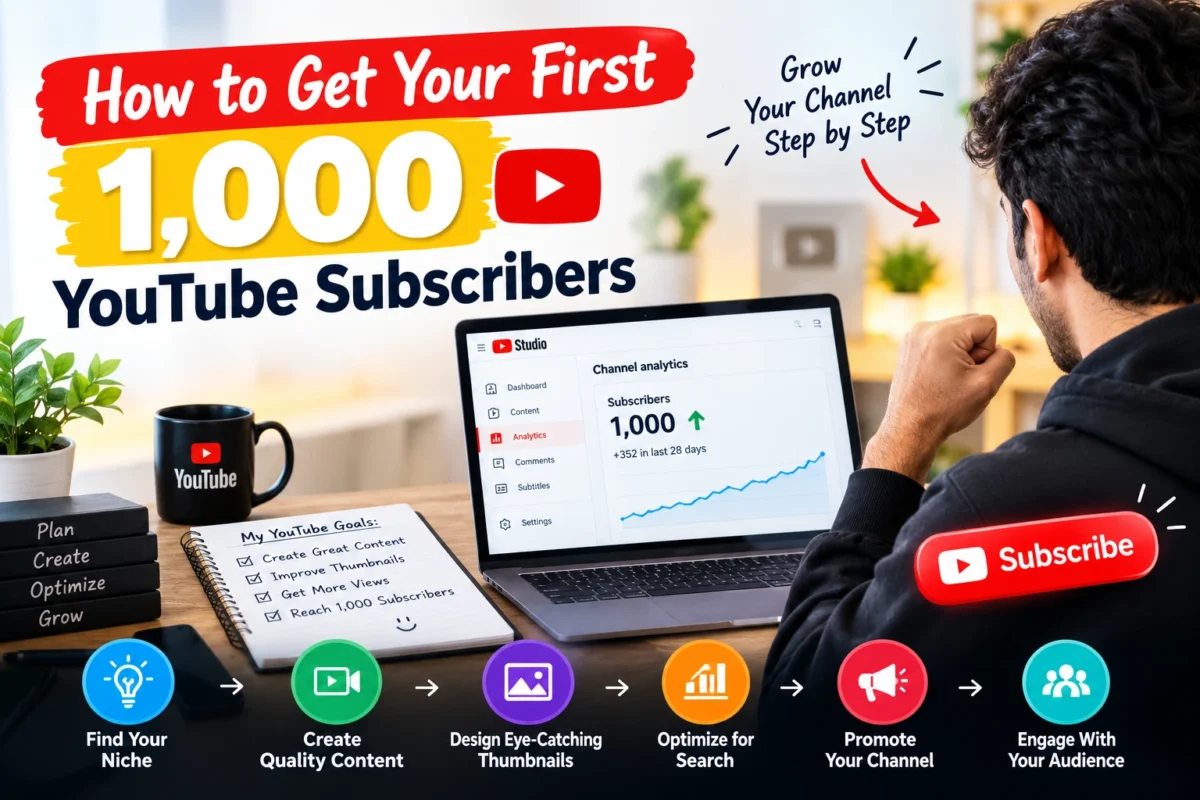
Getting your first 1,000 YouTube subscribers can feel like one of the biggest challenges when starting a channel. You spend time creating videos, editing clips, designing thumbnails, and writing titles, yet your subscriber count may barely move.
The good news is that you do not need expensive equipment, a large marketing budget, or an existing audience to start growing. You need a clear content strategy, an understanding of your viewers, and a repeatable process for improving every video you publish.
Learning how to get 1,000 YouTube subscribers is about more than increasing a number. It is about attracting the right people, giving them a reason to watch your content, and building enough trust that they want to see more.
In this guide, you will discover practical ways to grow your YouTube channel, improve video discoverability, turn viewers into subscribers, and avoid common mistakes that slow down channel growth.
Why Are Your First 1,000 YouTube Subscribers So Difficult to Get?
When you launch a new channel, YouTube has limited information about your content and audience. Your early videos may receive few impressions, and you may not yet know which topics attract the right viewers.
Several factors can make early growth difficult:
- Your channel covers too many unrelated topics.
- Your video titles do not clearly communicate their value.
- Your thumbnails fail to attract attention.
- Your introductions take too long to reach the main point.
- Your videos do not give viewers a compelling reason to return.
- You publish inconsistently or fail to learn from performance data.
These challenges are normal for beginners. Instead of assuming your channel cannot grow, treat each upload as an opportunity to learn what your audience wants.
The goal is to develop a recognizable channel that consistently delivers useful, entertaining, or informative content.
10: Practical Ways to Get Your First 1,000 YouTube Subscribers
1. Choose a Clear YouTube Niche
One of the most effective ways to improve channel growth is to give viewers a clear reason to subscribe.
If you upload a gaming video today, a cooking tutorial tomorrow, and a business lecture the following day, viewers may struggle to understand what your channel offers.
A focused niche helps you attract people with related interests.
Examples of beginner-friendly niches include:
- Technology tutorials and app reviews.
- Educational videos and study tips.
- Gaming guides and commentary.
- Digital marketing and freelancing.
- Cooking and practical lifestyle advice.
- Personal productivity and career development.
- Fitness education and beginner workouts.
Choose a niche that matches your interests, knowledge, and ability to create content consistently.
You do not have to cover only one narrow subject forever. Start with a clear audience and explore related topics that serve the same viewers.
2. Create Videos That Solve Specific Problems
People often search YouTube because they want an answer, a demonstration, or a solution to a problem.
Videos that address specific questions can help new channels reach viewers who have not discovered them before.
For example, a beginner technology channel could publish:
- How to free up storage on an Android phone.
- How to create a professional CV for an internship.
- How to edit YouTube Shorts on a smartphone.
- How to use an AI tool for everyday tasks.
These topics have a clear purpose and tell viewers what they can expect to learn.
Before producing a video, ask yourself three questions:
- Who is this video for?
- What problem will it solve?
- Why would someone choose my explanation over other available videos?
Your answer should guide the script, title, thumbnail, and overall presentation.
3. Research Keywords Before Uploading
YouTube SEO helps viewers discover your content through relevant searches and other discovery surfaces.
Start by researching the phrases your target audience uses when looking for information. You can explore YouTube search suggestions, examine competing videos, and use keyword research tools to identify potential topics.
For example, if your channel teaches video editing, related searches might include "how to edit videos on mobile," "beginner video editing tutorial," and "how to add captions to YouTube Shorts."
Use your primary phrase naturally in:
- The video title.
- The opening of your description, where relevant.
- Your spoken explanation, when it fits naturally.
- Chapters or other supporting information when appropriate.
Tags may help with misspellings and variations, but they are not a substitute for a useful video, an accurate title, or a strong viewer experience.
Do not repeat the same keyword unnaturally. Your content should be written for people first.
4. Improve Your Titles and Thumbnails
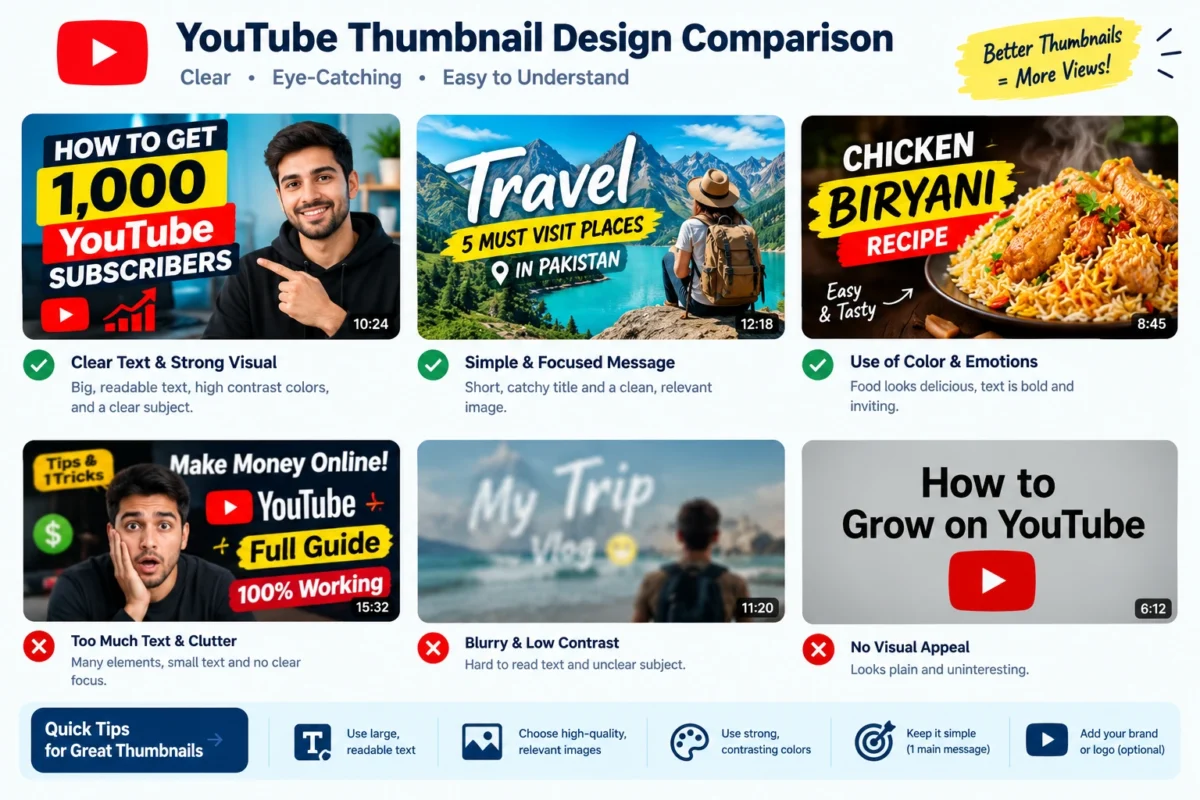
Your title and thumbnail influence whether someone decides to watch your video when it appears in search results or recommendations.
A strong title communicates the topic or benefit clearly. A useful thumbnail makes the subject easy to understand at a glance.
For example, instead of using a vague title such as "My Editing Tips," try "How to Edit YouTube Shorts on Your Phone."
Your thumbnail might show a phone, a recognizable editing interface, and a short phrase that reinforces the video's purpose.
To improve your packaging:
- Make the topic immediately understandable.
- Use readable text only when it adds value.
- Choose images that accurately represent the video.
- Avoid clutter and unnecessary visual elements.
- Do not promise results the video cannot deliver.
Review your YouTube Studio analytics to understand how viewers respond to your titles and thumbnails. Interpret click-through rates in context because performance varies by traffic source, audience, and video type.
5. Hook Viewers in the First Few Seconds
Getting someone to click is only part of the challenge. Your video also needs to hold their attention.
Avoid long introductions that delay the answer. Start by explaining the problem, showing the result, or previewing the information viewers came to learn.
For example, a video about improving YouTube thumbnails could begin with:
"Your thumbnail might be making your video harder to click. Here are three changes you can test today."
Then move directly into the first tip.
Use a structure that suits your topic:
- Introduce the problem or question.
- Explain the main points in a logical order.
- Support your advice with examples or demonstrations.
- Summarize the most useful takeaway.
Do not use misleading hooks or unnecessary suspense. The opening should accurately represent what the rest of the video delivers.
6. Publish Consistently and Build a Content Plan
Consistency helps you establish a production routine and gives viewers more opportunities to discover your channel.
However, consistency does not mean uploading every day regardless of quality. A manageable schedule is more useful than an ambitious schedule that causes burnout.
You might start with one well-produced long-form video each week and add Shorts when they suit your topic and available time.
Plan related videos in advance. For example, a channel about freelancing could publish a sequence covering portfolio creation, proposal writing, client communication, and project management.
This creates a connected library of content that viewers can explore after watching one video.
Use a simple content calendar to track topics, planned publication dates, production status, and performance notes.
7. Use YouTube Shorts to Reach New Viewers
YouTube Shorts can introduce your channel to viewers who may not discover your longer videos through search.
They work particularly well when you can communicate a useful idea, demonstrate a technique, or share a compelling moment in a short format.
For example, a graphic design channel could publish a Short showing three common typography mistakes. The creator could then direct interested viewers to a related full-length tutorial when an appropriate clickable link or other supported feature is available.
To make Shorts more effective:
- Focus each video on one main idea.
- Capture attention immediately.
- Keep captions readable on mobile screens.
- Use relevant visuals and clear narration.
- Give viewers a natural reason to explore related content.
Avoid posting unrelated viral clips simply to gain subscribers. Those viewers may have little interest in your main channel, and copied content can create copyright and monetization problems.
8. Turn First-Time Viewers into Returning Viewers
A viewer who watches one video may not subscribe immediately. Your job is to make the next step obvious by providing related content worth watching.
Create playlists around specific subjects, use end screens where available, and refer viewers to relevant videos when the recommendation genuinely helps them.
For example, if someone watches a tutorial about creating a YouTube thumbnail, a related video about improving video titles may be a logical next recommendation.
You can also ask viewers to subscribe when you have delivered useful information and explained what they can expect from your channel.
A natural call to action might be:
"If you want more practical YouTube growth tutorials, subscribe for the next guide."
Give people a clear reason to return instead of repeatedly asking for subscriptions without offering value.
9. Promote Your Videos in Relevant Communities
You do not have to depend entirely on YouTube recommendations to attract your first viewers.
You can share useful videos through relevant social media accounts, professional communities, newsletters, or discussion groups when their rules permit it.
For example, if you publish a tutorial about improving CVs, sharing it with a career-focused audience may help you reach people who genuinely need that information.
Avoid spamming groups with the same link or sending unsolicited messages to strangers.
A better approach is to participate in relevant discussions, answer questions, and share your video when it provides a useful explanation or resource.
You can also collaborate with creators who serve a similar audience. A well-matched collaboration introduces your channel to people who are more likely to be interested in your content.
10. Study Analytics and Improve Every Month
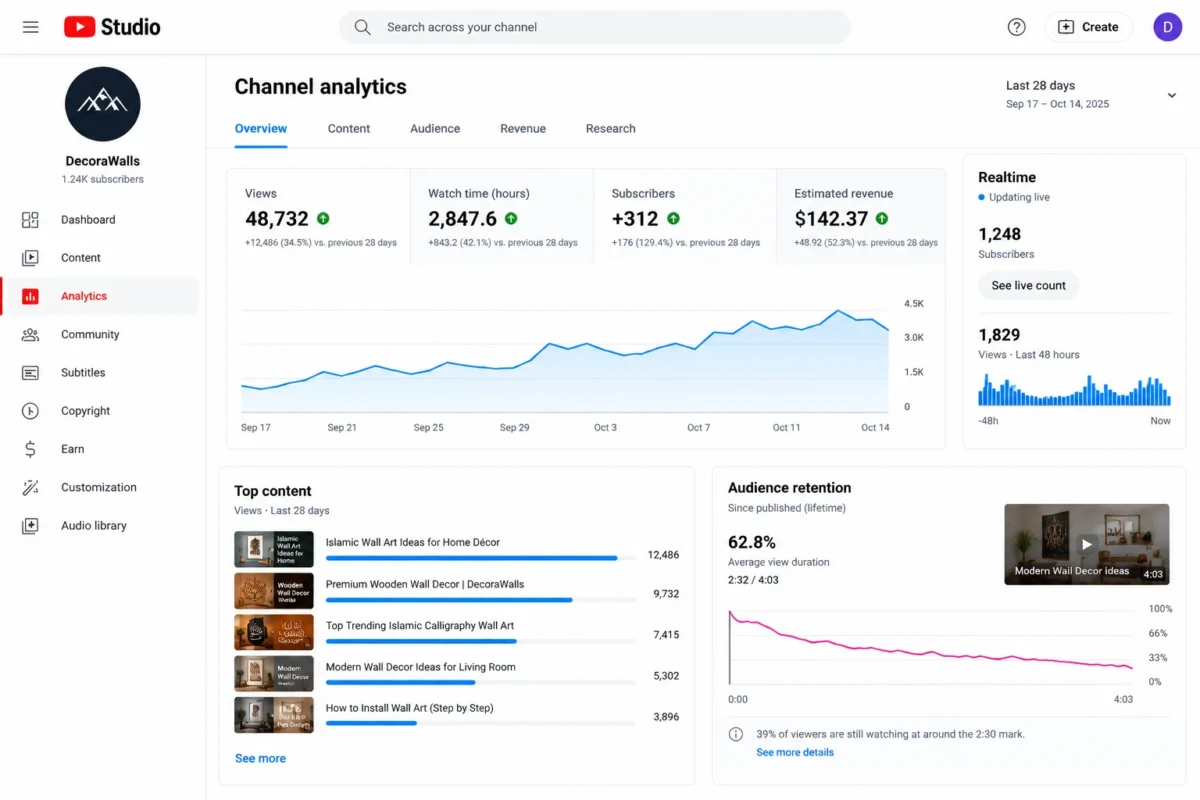
YouTube Studio provides information that can help you understand what is working and what needs improvement.
Rather than focusing only on subscriber totals, review several performance indicators.
Metric | What it can help you understand |
Impressions | How often your thumbnail is shown in eligible YouTube surfaces |
Click-through rate | How often viewers click after seeing an eligible impression |
Audience retention | Where viewers continue watching or leave |
Watch time | How much viewing time your content generates |
Returning viewers | Whether people come back to watch more |
Subscribers gained | Which videos attract subscribers |
Look for patterns across several videos rather than drawing conclusions from one upload.
If tutorial videos attract more relevant subscribers than general commentary, consider producing more tutorials. If viewers leave early, examine whether your introduction is too long or the video fails to deliver on its title.
Use analytics to test improvements, not to copy every trend or change your niche whenever a video underperforms.
How Long Does It Take to Reach 1,000 YouTube Subscribers?
There is no universal timeline for reaching 1,000 subscribers. Some channels grow quickly because their topics, presentation, and audience demand align well. Others need considerably more time to develop a consistent audience.
Your results may depend on:
- The demand for your niche.
- The usefulness and originality of your content.
- Your titles and thumbnails.
- Audience retention and satisfaction.
- Your publishing consistency.
- Competition and changing viewer interests.
Instead of setting a deadline you cannot control, establish goals you can influence.
For example, your initial targets could include publishing a planned set of high-quality videos, testing several related topics, improving your editing workflow, and reviewing analytics regularly.
Measure progress through both audience growth and improvements in content quality.
Can You Monetize Your Channel After Reaching 1,000 Subscribers?
Reaching 1,000 subscribers is an important milestone, but it does not automatically qualify your channel for advertising revenue.
Under YouTube's standard Partner Program eligibility routes, creators generally need 1,000 subscribers and either 4,000 valid public watch hours from long-form videos during the previous 12 months or 10 million valid public Shorts views during the previous 90 days.
Watch hours earned from the Shorts Feed do not count toward the 4,000-hour long-form requirement. Your channel must also meet applicable policy requirements and pass YouTube's review.
Some eligible creators may have access to earlier Partner Program features under separate thresholds in supported countries. These features are not the same as full advertising revenue eligibility.
Check the Earn tab in YouTube Studio and the official YouTube Partner Program eligibility guidance for the latest requirements that apply to your channel.
Common Mistakes to Avoid When Growing Your Channel
Several shortcuts can undermine your progress or put your channel at risk.
Buying subscribers: Purchased subscribers are unlikely to provide meaningful engagement and can violate YouTube's fake engagement policies.
Copying other creators: Study successful channels to understand presentation and audience needs, but develop your own scripts, examples, and creative approach.
Changing niches too often: Frequent shifts between unrelated subjects can make it difficult to attract a consistent audience.
Ignoring audience retention: A high click-through rate is not enough if viewers leave because the content does not match their expectations.
Using misleading thumbnails: Misrepresentation may attract clicks initially but can disappoint viewers and weaken trust.
Expecting instant results: Subscriber growth is unpredictable. Focus on making improvements you can repeat instead of chasing guaranteed outcomes.
Key Takeaways
- Choose a clear niche and create videos for a specific audience.
- Research topics and search phrases before production.
- Improve titles, thumbnails, and introductions to attract and retain viewers.
- Use Shorts, playlists, and related videos to help viewers discover more of your content.
- Promote videos in relevant communities without spamming.
- Review analytics to identify opportunities for improvement.
- Avoid buying subscribers and other artificial growth tactics.
- Remember that 1,000 subscribers alone does not guarantee YouTube advertising monetization.
Frequently Asked Questions
1. How can I get my first 1,000 YouTube subscribers fast?
Focus on a clear niche, useful videos, compelling titles, and relevant thumbnails. Research topics your audience wants to understand, publish consistently, and use Shorts or collaborations where appropriate. There is no guaranteed timeline, so prioritize sustainable growth and audience engagement rather than buying subscribers or using artificial engagement tactics.
2. How many videos do I need to reach 1,000 subscribers?
There is no fixed number of videos required to reach 1,000 subscribers. A channel’s growth depends on its subject, audience demand, video quality, and discoverability. Instead of chasing a specific upload count, publish consistently, study performance, and improve your content based on what viewers actually watch and respond to.
3. Can YouTube Shorts help me get 1,000 subscribers?
Yes. Shorts can expose your content to new viewers and help you attract subscribers when the videos match your channel’s main subject. Focus on original, useful Shorts and connect them with relevant longer videos when appropriate. Views alone do not guarantee subscriptions, so give viewers a clear reason to follow your channel.
4. Do I need 1,000 subscribers to earn money on YouTube?
Not necessarily for every possible income source. Sponsorships, affiliate marketing, and selling services may be possible before reaching 1,000 subscribers, depending on the arrangement. However, 1,000 subscribers is part of the standard eligibility requirements for YouTube’s main advertising monetization routes, which also require qualifying watch hours or Shorts views and channel approval.
5. Is buying YouTube subscribers a good idea?
No. Purchased subscribers generally do not provide genuine audience engagement and may violate YouTube’s fake engagement policies. Artificial growth can distort your analytics and put your channel at risk. Build your audience through useful content, relevant promotion, and authentic interactions with viewers who are genuinely interested in your videos.
Conclusion
Learning how to get your first 1,000 YouTube subscribers starts with understanding your audience and consistently creating content that deserves their attention.
Choose a niche you can sustain, publish useful videos, improve your titles and thumbnails, and give viewers a reason to return. Use Shorts and relevant promotion to expand your reach, then review your analytics to learn which topics and formats work best.
Do not rely on shortcuts such as buying subscribers or copying popular videos. Focus on building a real audience that values what you publish.
Your first 1,000 subscribers are not just a number. They represent an opportunity to establish a recognizable channel, develop your content skills, and build a foundation for long-term growth.
Keep reading
Related articles
How to Start a Gaming YouTube Channel in Pakistan: A Complete Guide
Do you enjoy playing PUBG Mobile, Free Fire, Minecraft, GTA V, or other video games? What if you could turn your gaming…

How to Monetize a Gaming Channel in Pakistan: Complete Guide
Gaming is more than a hobby for many Pakistani players. You can turn your gameplay, gaming tutorials, live streams, and commentary into…

How Pakistani Students Can Earn Money from YouTube Shorts
Are you a student in Pakistan looking for ways to earn money online without investing a lot of money? YouTube Shorts could…
Want to learn this practically?
Join a Uskills course — classes onsite in Johar Town, Lahore or online.