

How Pakistani Students Can Earn Money from YouTube Shorts
Are you a student in Pakistan looking for ways to earn money online without investing a lot of money? YouTube Shorts could be an opportunity to turn your creativity, knowledge, and everyday skills into a potential source of income.
You do not need an expensive camera, a professional studio, or advanced video-editing skills to get started. With a smartphone, a clear content idea, and consistent effort, you can create short videos that educate, entertain, or help people solve everyday problems.
However, earning money from YouTube Shorts involves more than uploading videos and collecting views. You need to understand YouTube monetization requirements, create original content, build an audience, and explore different income opportunities.
In this guide, you will learn how Pakistani students can earn money from YouTube Shorts, which content ideas are worth exploring, how monetization works, and what you can do to start your channel on a student-friendly budget.
What Are YouTube Shorts?
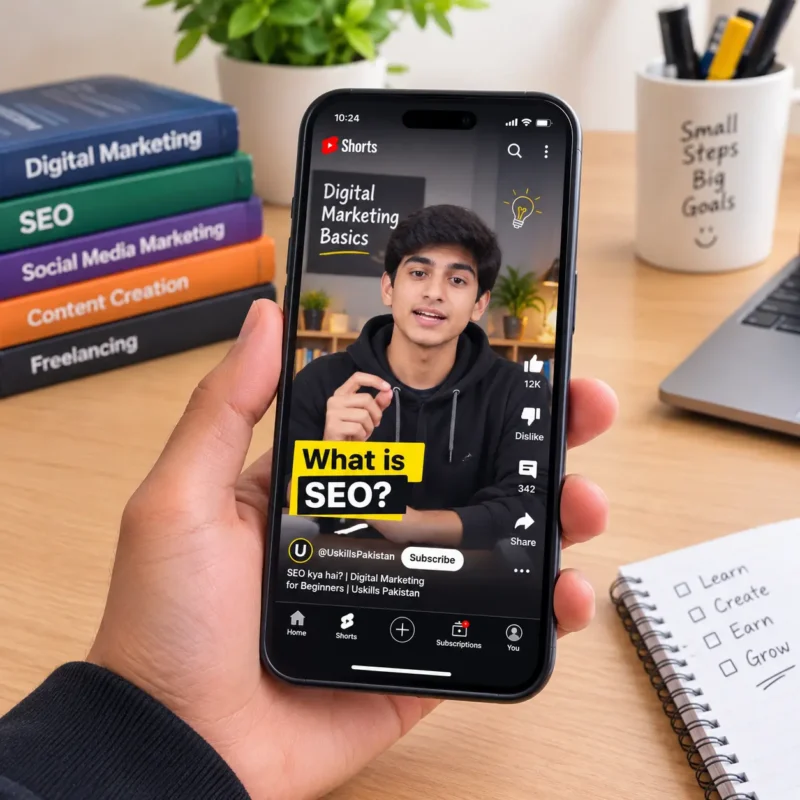
YouTube Shorts are short-form vertical videos designed for quick viewing on mobile devices and other supported platforms. They allow creators to share educational tips, entertainment, tutorials, product demonstrations, and personal experiences.
For students, Shorts provide a practical way to experiment with content creation without committing to lengthy video production.
For example, a university student studying computer science could create short tutorials about coding basics. An English-language learner could share vocabulary lessons, while a graphic design student could demonstrate simple design techniques.
The best content idea depends on your interests, existing skills, and the audience you want to serve.
You can create Shorts using your smartphone, edit them with accessible video-editing tools, and upload them through YouTube. You do not need to show your face in every video, although your content should demonstrate original effort and provide genuine value.
Can Pakistani Students Earn Money from YouTube Shorts?
Yes, Pakistani students can explore YouTube Shorts as a way to build an audience and potentially earn income. However, the amount they earn depends on their monetization eligibility, audience, content, revenue sources, and consistency.
There are two broad approaches to earning:
- Direct monetization: Earning through eligible YouTube Partner Program features, including Shorts Feed advertising revenue.
- Indirect monetization: Earning through sponsorships, affiliate marketing, freelance services, or your own products.
These approaches work differently. A student who has not yet qualified for advertising revenue may still be able to earn through legitimate business partnerships or by using Shorts to attract customers for a service.
YouTube's official Partner Program eligibility guidelines explain the requirements for monetization. Check the Earn section of YouTube Studio for the current eligibility criteria applicable to your channel.
5: Ways Pakistani Students Can Earn Money from YouTube Shorts
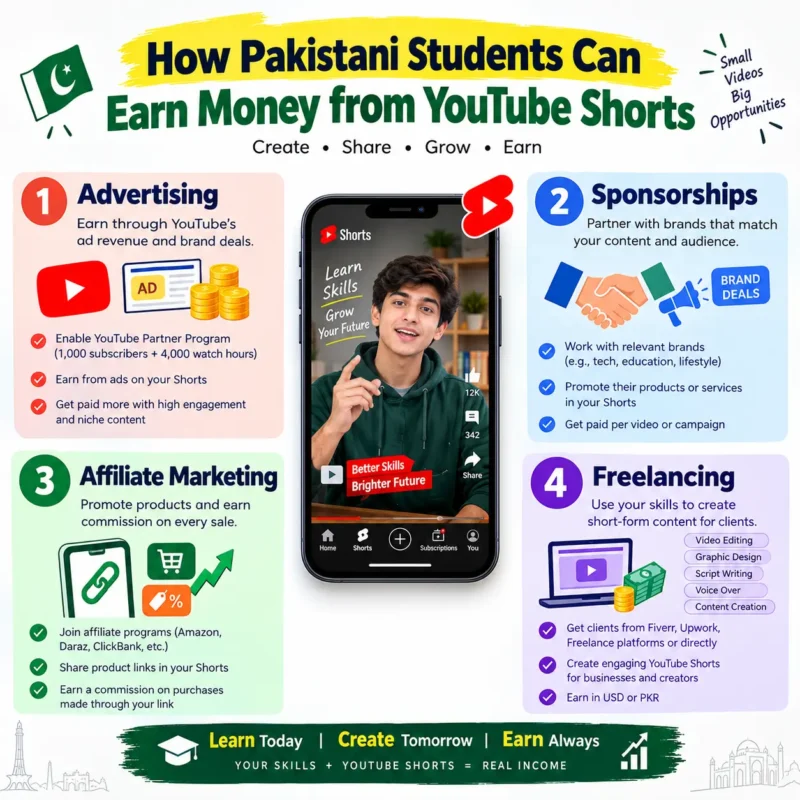
1. Earn Through YouTube Shorts Monetization
One way to earn directly from Shorts is to join the YouTube Partner Program and qualify for Shorts Feed advertising revenue.
Under the standard eligibility requirements currently documented by YouTube, creators generally need 1,000 subscribers and either 4,000 valid public watch hours from long-form videos during the previous 12 months or 10 million valid public Shorts views during the previous 90 days.
Watch hours earned from the Shorts Feed do not count toward the 4,000-hour long-form requirement. Meeting the numerical threshold also does not guarantee approval; your channel must pass YouTube's review and comply with its monetization policies.
Once eligible, you must accept the relevant Shorts monetization terms to receive eligible Shorts advertising revenue.
For students, this means focusing on content that attracts genuine viewers and encourages people to return to the channel.
Keep in mind that views alone do not guarantee income. Earnings vary according to eligible engaged views, audience location, advertising demand, music usage, and other factors. Do not assume that a specific number of views will produce a fixed amount of money.
2. Earn Through Affiliate Marketing
Affiliate marketing allows you to earn a commission when someone purchases a product or completes another qualifying action through your affiliate link.
For example, a student who creates mobile photography tutorials might recommend a tripod, a microphone, or a useful editing tool. A technology-focused creator could review affordable accessories or demonstrate software features.
A practical process looks like this:
- Choose products or services relevant to your content.
- Join a legitimate affiliate program that accepts participants from Pakistan.
- Create helpful Shorts demonstrating the product or explaining its benefits.
- Add your affiliate link wherever the platform and program permit, such as an eligible channel profile or other permitted link destination.
- Clearly disclose your affiliate relationship.
Do not assume every link placed in a Shorts description will be clickable or equally accessible to viewers. Check YouTube's current linking features and the affiliate program's terms before planning your campaign.
Most importantly, recommend products honestly. Affiliate marketing works best when the product genuinely helps your audience rather than being promoted simply because it offers a commission.
3. Work with Brands and Sponsors
As your channel develops a recognizable audience, businesses may become interested in sponsoring your content.
For example, a student who regularly publishes educational Shorts could collaborate with a relevant learning platform. A creator who shares technology tutorials might work with a legitimate software company or accessories brand.
You do not necessarily need millions of subscribers to demonstrate value to a potential sponsor. A clearly defined niche, credible content, and an engaged audience can help you explain why your channel is relevant to a brand.
To prepare for sponsorship opportunities:
- Publish content consistently within a clear niche.
- Maintain a professional channel profile.
- Track audience engagement and relevant performance metrics.
- Prepare a simple media kit when you have meaningful results to share.
- Contact suitable businesses with a specific collaboration proposal.
Never promise guaranteed views or sales. Agree on deliverables, payment terms, usage rights, and disclosure requirements before starting sponsored work.
4. Promote Your Freelance Skills
YouTube Shorts can also help students find clients for freelance services.
If you know graphic design, video editing, web development, content writing, or social media management, you can demonstrate your work through short educational videos and project examples.
For example, a beginner video editor could publish a Short showing how a raw clip becomes a polished social media video. A web development student could explain a simple website feature, while a graphic designer could demonstrate a logo-design process.
Each video can highlight a specific skill and direct interested viewers toward an appropriate contact method or portfolio.
This approach does not depend entirely on YouTube advertising monetization. You are using the platform to demonstrate your abilities and attract potential customers.
Make sure your examples are genuine, your portfolio represents your own work, and you only claim skills you can actually deliver.
5. Sell Digital Products or Learning Resources
Students with useful knowledge can create digital products for a clearly defined audience.
Possible examples include:
- Study planners and revision templates.
- Original notes and practice worksheets.
- Canva templates and design resources.
- Beginner coding exercises.
- Video-editing presets or tutorials.
- Productivity guides for students.
Suppose you create Shorts explaining study techniques for university students. You could also offer an original study planner that helps viewers organize their assignments and examination preparation.
The videos provide useful free information, while the digital product offers additional value for people who want a structured resource.
Before selling anything, ensure your materials are original or properly licensed. Be transparent about pricing, product contents, and any limitations.
Best YouTube Shorts Ideas for Pakistani Students
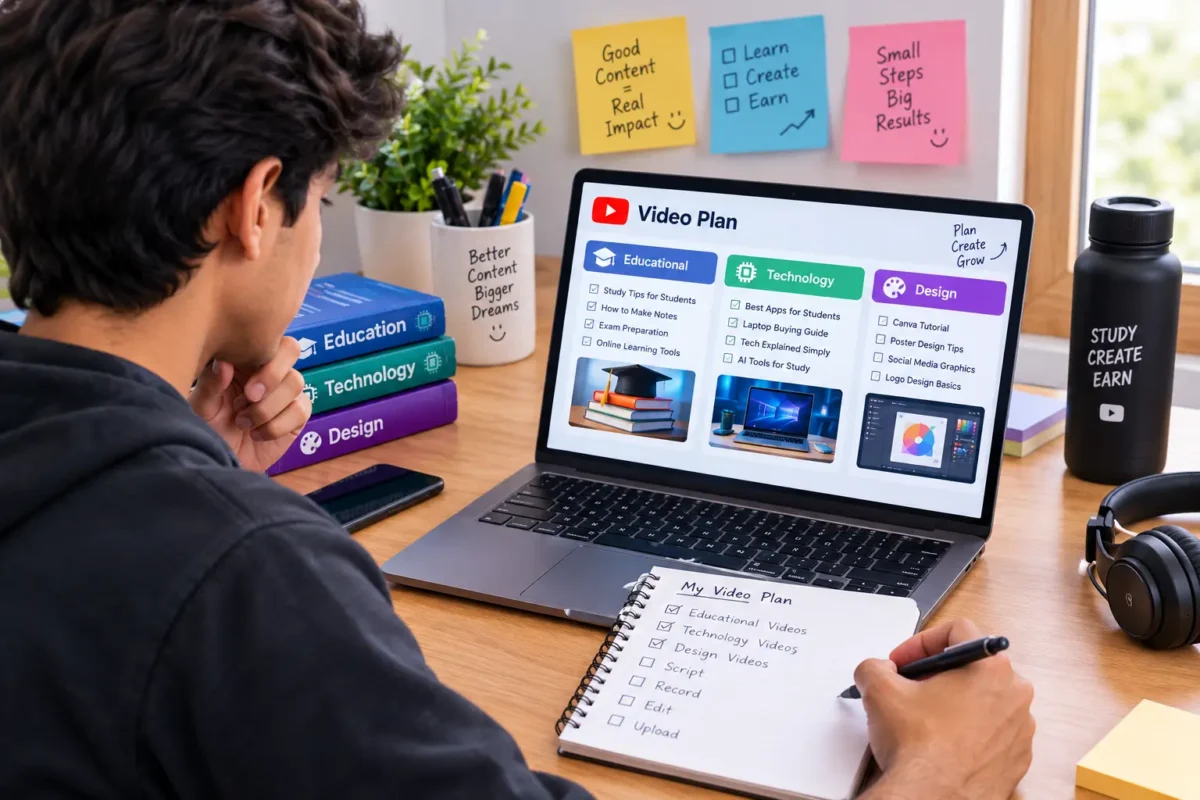
Choosing the right niche is one of the most important decisions you will make. A good niche combines your interests, your ability to create content consistently, and an audience that wants the information you provide.
Here are some options worth considering.
Content niche | Short video ideas |
Education | Study tips, subject explanations, exam preparation |
Technology | Mobile tricks, app tutorials, beginner tech guides |
Freelancing | Portfolio tips, client communication, skill demonstrations |
English learning | Vocabulary, pronunciation, everyday conversations |
Graphic design | Canva tutorials, design mistakes, quick transformations |
Student lifestyle | Budgeting, productivity, campus routines |
Coding | Programming basics, common errors, mini projects |
Career development | CV tips, interview preparation, career skills |
Choose one main topic initially rather than switching between unrelated subjects in every upload.
For example, a channel focused on freelancing for beginners can cover portfolio creation, client communication, proposal writing, and project management. These subjects appeal to a relatively consistent audience.
Avoid choosing a niche solely because another creator appears successful. Your ability to provide original, useful information over time is more important than copying a popular format.
How to Start a YouTube Shorts Channel with Little Money
You do not need to spend heavily to test your first content ideas. Follow these steps to establish a practical starting routine.
Step 1: Choose Your Niche and Audience: Decide who you want to help and what type of content you can produce regularly.
For example, you might target Pakistani university students who want to improve their English or learn beginner-friendly digital skills.
A clearly defined audience makes it easier to develop relevant topics and establish a recognizable channel identity.
Step 2: Set Up Your Channel: Create your YouTube channel with a clear name, suitable profile image, and concise description.
Explain what viewers can expect from your videos. If your channel teaches beginner graphic design, your description should communicate that focus rather than making vague promises about earning money.
Enable the security features available for your Google account, and keep your account information secure.
Step 3: Create Useful Short Videos: Start with topics you understand and can explain accurately.
A simple video structure is:
- Hook: Introduce a question or problem that matters to viewers.
- Value: Explain the tip, demonstrate the process, or share the solution.
- Next step: Encourage viewers to try the technique, ask a relevant question, or explore related content.
For example, a Short about CV writing could open with, "Applying for internships? Avoid this common CV mistake." The video could then demonstrate a practical improvement.
Make the opening relevant rather than misleading. Your video should deliver what its hook promises.
Step 4: Edit for Clarity: Use a video-editing app that suits your device and experience. Focus on clear audio, readable text, appropriate pacing, and vertical framing.
You can record your own demonstrations, use screen recordings where permitted, or create original animations and explanatory graphics.
Add captions when they improve accessibility, and ensure the text remains readable on a small screen.
Do not use copyrighted music or other people's footage without appropriate rights. YouTube's monetization policies also restrict reused and mass-produced content that lacks meaningful original value.
Step 5: Publish Consistently: Develop a realistic schedule that fits around your studies.
For example, you might start with three Shorts each week and adjust based on your workload and the response to your content. This is a suggested starting schedule, not a formula for guaranteed growth.
Batching scripts and recording several videos during one session can make content creation easier to manage.
Step 6: Review Analytics and Improve: Use YouTube Studio to understand how viewers respond to your videos.
Review available metrics such as:
- Views and engaged views.
- How viewers choose to watch or skip your Shorts.
- Audience retention and average view duration.
- Subscribers gained from individual videos.
- Traffic sources and returning viewers.
Look for patterns rather than judging your entire channel by one video. If tutorial videos consistently attract a relevant audience, develop more topics in that category and test different ways to explain them.
Important YouTube Monetization Rules Students Should Know
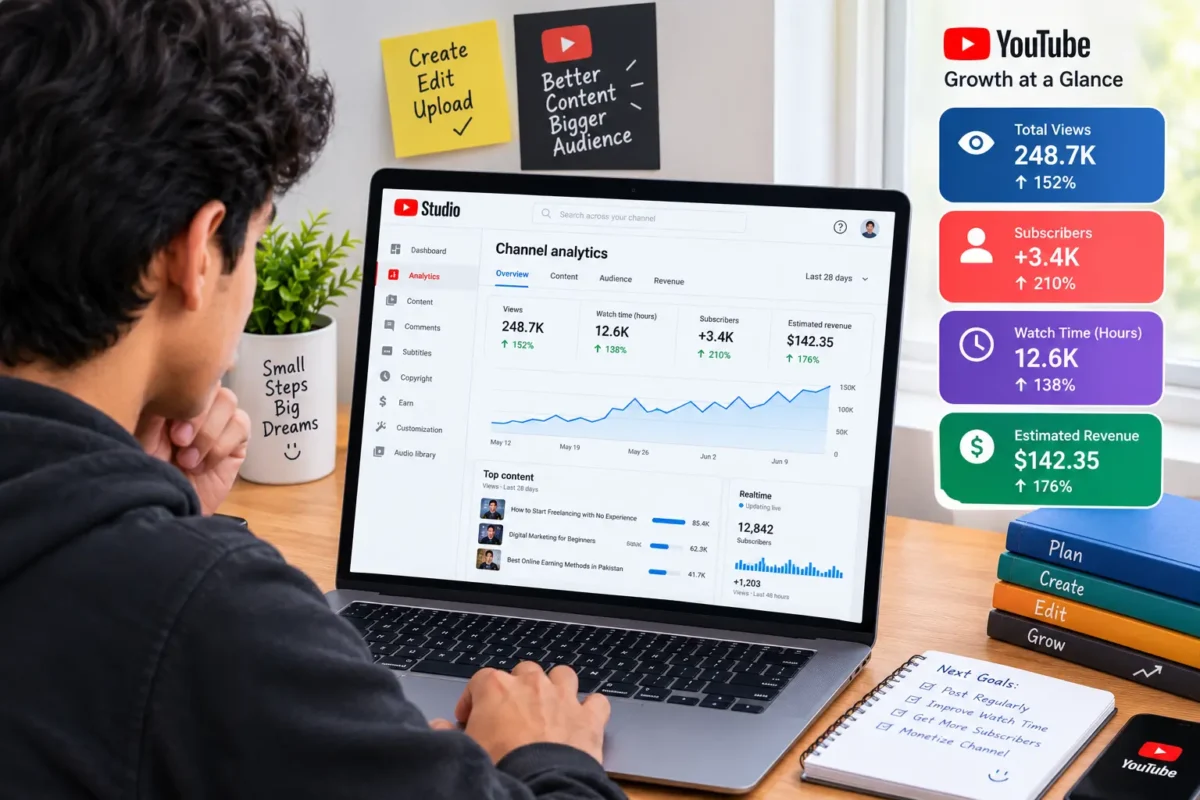
Building a channel responsibly is essential if you want to earn money over the long term.
Create Original Content: Avoid downloading viral videos from TikTok, Instagram, films, or other YouTube channels and reposting them with minimal changes.
YouTube's reused-content policy can affect monetization even when a creator has permission to use the original material. Copyright rules are a separate consideration, so permission alone does not automatically establish monetization eligibility.
If you use third-party material, add meaningful original commentary or transformation where appropriate and make sure you have the necessary rights.
Avoid Fake Views and Subscribers: Do not purchase subscribers, use automated viewing services, or participate in schemes that artificially inflate engagement.
Such tactics can distort your analytics and put your channel or monetization eligibility at risk.
Be Careful with AI-Generated Videos: AI tools can help you brainstorm topics, draft scripts, edit captions, or produce original visual assets. However, using AI does not automatically make a video eligible or ineligible for monetization.
Your finished content should offer meaningful educational, creative, or entertainment value. Repetitive, mass-produced videos with little original contribution may fail YouTube's monetization requirements.
Protect Your Studies and Personal Information: Treat content creation as a skill-building activity rather than guaranteed income.
Set reasonable time limits, avoid sharing private information, and be cautious of people promising instant monetization or guaranteed earnings in exchange for fees.
Common Mistakes to Avoid
New creators often focus on quick growth instead of building a sustainable channel.
Avoid these common mistakes:
- Expecting to earn money immediately after uploading your first Short.
- Changing niches so frequently that viewers cannot identify your channel's purpose.
- Copying successful creators without adding your own perspective.
- Using misleading titles or hooks that do not match the video.
- Ignoring copyright and monetization policies.
- Buying views or subscribers.
- Assuming all views generate advertising revenue.
- Depending on advertising income when other relevant earning methods are available.
A better approach is to improve one aspect of your content at a time, learn from your analytics, and focus on helping a specific audience.
Key Takeaways
- Pakistani students can use YouTube Shorts to develop an audience and explore different income opportunities.
- Direct advertising revenue requires YouTube Partner Program eligibility and compliance with monetization policies.
- Affiliate marketing, sponsorships, freelance services, and digital products provide alternative ways to earn.
- A smartphone and a clear content idea can be enough to start testing your approach.
- Original content, audience relevance, and consistent improvement matter more than copying trends.
- Earnings are not guaranteed and vary by channel, audience, monetization method, and other factors.
Frequently Asked Questions
1. Can Pakistani students earn money from YouTube Shorts?
Yes. Pakistani students can explore YouTube Shorts as a potential income source through eligible YouTube monetization features, sponsorships, affiliate marketing, freelance services, and digital products. Advertising revenue requires meeting YouTube’s eligibility requirements and passing its channel review. Earnings are not guaranteed, and each income method has its own conditions.
2. How many views are needed to monetize YouTube Shorts?
Under the standard YouTube Partner Program requirements currently documented, the Shorts-based route requires 1,000 subscribers and 10 million valid public Shorts views within 90 days. An alternative route is 1,000 subscribers and 4,000 valid public watch hours from long-form videos within 12 months. Always check YouTube Studio for the latest requirements.
3. How much can a student earn from YouTube Shorts in Pakistan?
There is no fixed amount that every student earns. Income depends on eligibility, qualified views, audience location, advertising demand, content suitability, and other factors. Sponsorships, affiliate commissions, and freelance work may provide additional income, but results vary. Be cautious of anyone promising guaranteed earnings based on a specific number of views.
4. Can I earn money from YouTube Shorts without showing my face?
Yes. You can create educational tutorials, screen recordings, original animations, product demonstrations, or narrated explanatory videos without appearing on camera. The important factors are originality, usefulness, and compliance with YouTube policies. Reposting other people’s videos or producing repetitive content with minimal original value can create monetization problems.
5. What is the best YouTube Shorts niche for Pakistani students?
The best niche depends on your skills, interests, and target audience. Education, English learning, technology tutorials, coding, graphic design, freelancing tips, and student productivity are practical options. Choose a subject you can explain accurately and develop consistently. Test different topics within your chosen niche and use audience analytics to guide future videos.
Conclusion
Learning how to earn money from YouTube Shorts in Pakistan can be a useful step for students who want to develop digital skills, build an online audience, and explore income opportunities alongside their studies.
Start with a niche you understand, create original videos that solve real problems, and publish on a schedule you can maintain. As your channel grows, explore eligible YouTube monetization features and other suitable options, such as affiliate marketing, sponsorships, freelancing, and digital products.
Most importantly, do not treat views as a guarantee of income. Focus on producing valuable content, understanding your audience, and improving your skills over time.
Your first goal should be to create a useful channel that people want to watch. With patience and a responsible strategy, that foundation can help you explore potential earning opportunities while continuing your education.
Keep reading
Related articles
How to Get Your First 1,000 YouTube Subscribers: A Complete Guide
Getting your first 1,000 YouTube subscribers can feel like one of the biggest challenges when starting a channel. You spend time creating…
How to Start a Gaming YouTube Channel in Pakistan: A Complete Guide
Do you enjoy playing PUBG Mobile, Free Fire, Minecraft, GTA V, or other video games? What if you could turn your gaming…
How to Monetize a Gaming Channel in Pakistan: Complete Guide
Gaming is more than a hobby for many Pakistani players. You can turn your gameplay, gaming tutorials, live streams, and commentary into…
Want to learn this practically?
Join a Uskills course — classes onsite in Johar Town, Lahore or online.