

LinkedIn Personal Branding Strategies for Business Owners

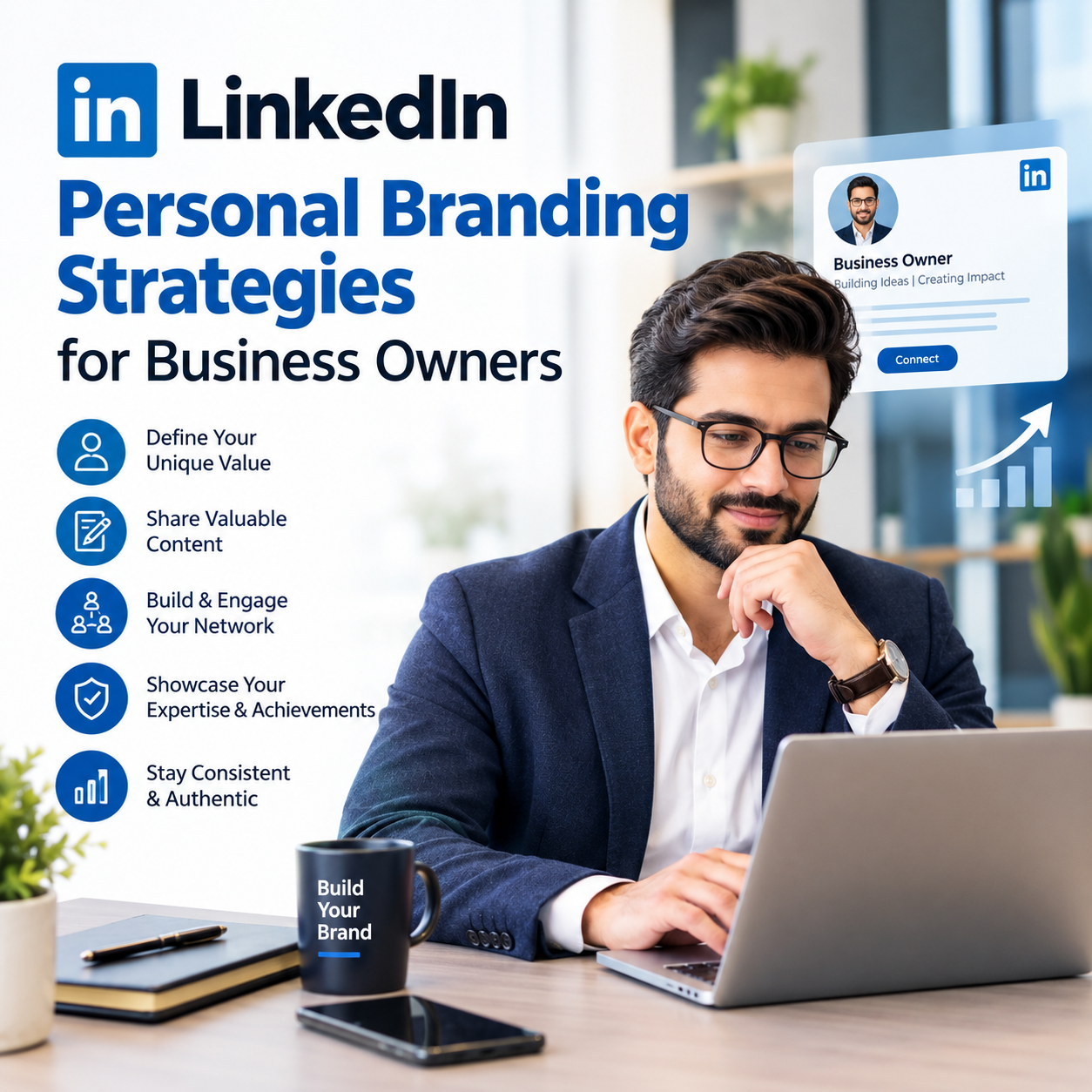
People do business with companies, but they also want to know the people behind them. Before contacting a service provider, partnering with a founder, or choosing a consultant, potential customers may look at their LinkedIn profile to understand their experience, expertise, and professional values.
That is why LinkedIn personal branding strategies for business owners deserve a place in your marketing plan. A strong personal brand helps you communicate what you do, demonstrate your knowledge, build professional relationships, and make it easier for the right people to understand why they should work with you.
However, personal branding is not about posting motivational quotes every morning or collecting as many connections as possible. It is about creating a consistent professional identity that reflects your real experience and the value you provide.
In this guide, you will learn how to optimize your LinkedIn profile, create valuable content, expand your network, build credibility, and turn your professional presence into meaningful business opportunities.
What Is LinkedIn Personal Branding for Business Owners?

LinkedIn personal branding is the process of presenting your professional identity, expertise, values, and experience in a way that helps other people understand what you offer.
For a business owner, your personal brand complements your company’s brand. Your company page communicates information about the business, while your personal profile gives people an opportunity to understand the person leading it.
For example, imagine you own a digital marketing agency. Instead of simply describing yourself as an agency founder, you could share practical lessons about content marketing, explain common SEO mistakes, and discuss how you approach client projects.
These activities give your audience a clearer picture of your expertise.
An effective personal brand should answer three questions:
- Who are you? Your professional identity and experience.
- Who do you help? Your ideal customers, partners, or audience.
- What value do you provide? The problems you solve and the results you aim to help others achieve.
When these answers are clear, your LinkedIn presence becomes more focused and memorable.
1. Define Your Personal Brand Before Posting
One of the biggest mistakes business owners make is publishing content without deciding what they want to be known for.
A clear personal branding strategy starts with positioning. You need to identify the professional topics, audience, and expertise you want your profile to communicate.
Choose your area of expertise
Select a few closely related subjects that connect your experience with your business goals.
For example:
Business type | Personal branding topics |
Digital marketing agency | SEO, content strategy, online visibility |
Real estate business | Property insights, market education, customer guidance |
Consulting firm | Industry analysis, problem-solving, business processes |
Software company | Product development, customer problems, technology trends |
Design agency | Brand identity, creative strategy, design decisions |
You do not need to discuss every subject related to your industry. Concentrate on the areas where you can provide meaningful insight.
Identify your ideal audience
Think about the people you want to reach. They might be potential customers, fellow entrepreneurs, investors, hiring managers, or industry partners.
Learn about their challenges, questions, and priorities. This helps you create content that is relevant to their needs rather than content that only promotes your company.
Practical tip: Complete this sentence before building your profile: “I help [target audience] understand or solve [specific problem] through [your expertise or service].”
Use the answer as a starting point for your headline, About section, and content strategy.
2. Optimize Your LinkedIn Profile for First Impressions
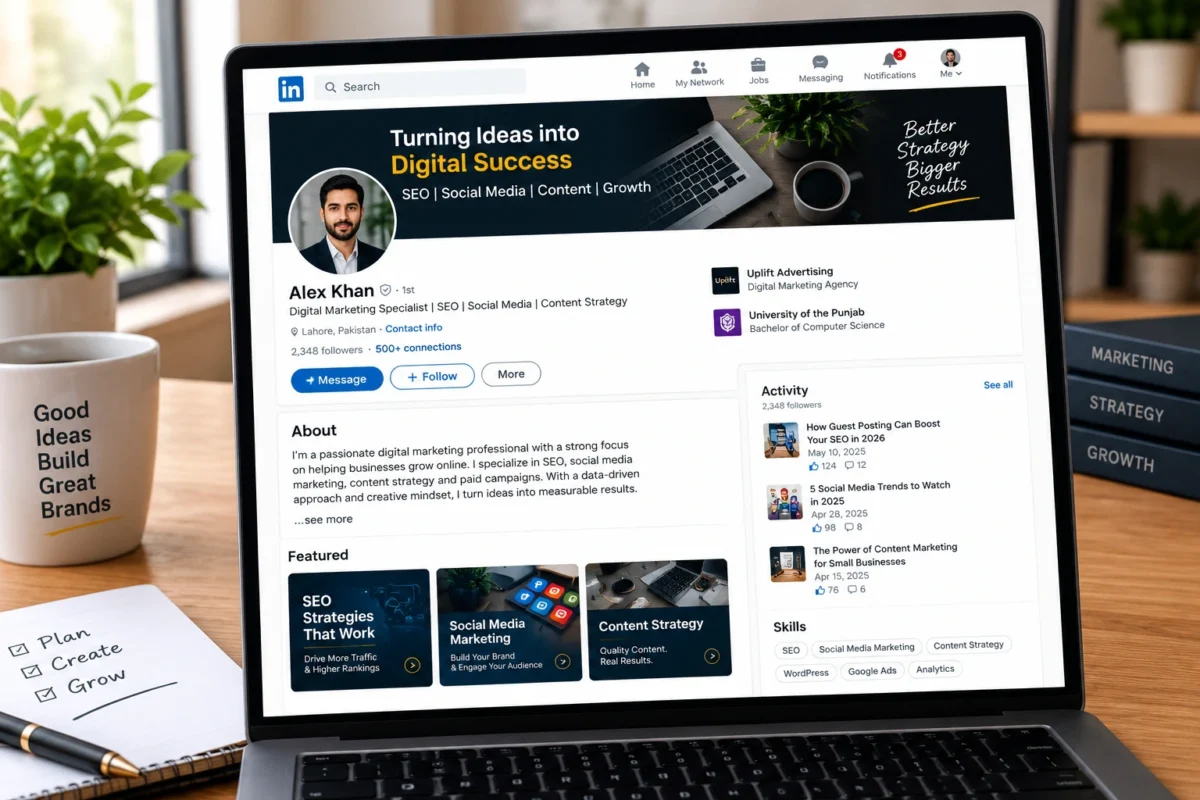
Your profile often serves as a professional introduction. When someone discovers your post or receives a connection request, they may visit your profile to learn more about you.
A complete, relevant profile helps them understand your background and business.
Write a specific LinkedIn headline
Your headline should communicate more than your job title.
For example, instead of writing:
“Founder at ABC Marketing”
Consider:
“Digital Marketing Agency Founder | Helping Small Businesses Improve SEO and Content Strategy”
The second version communicates your role, audience, and area of expertise.
Keep the wording accurate. Avoid claiming to be the leading expert or guaranteeing outcomes unless you can substantiate those statements.
Create a compelling About section
Use your About section to explain your professional background, the problems you help solve, and what people can expect from working with you.
A useful structure includes:
- Opening: Explain what you do and whom you serve.
- Experience: Describe relevant knowledge, projects, or lessons learned.
- Value: Explain how your approach helps clients or colleagues.
- Credibility: Include verifiable accomplishments or examples.
- Next step: Invite readers to connect, discuss a relevant topic, or visit your website.
Write in a natural first-person voice. Your About section should sound like a real professional introducing themselves, not a generic corporate brochure.
Improve your visual presentation
Use a clear, professional profile photo and a banner that reinforces your expertise or business focus.
Your banner could communicate your main service, target audience, or professional message. Keep the design simple enough to read on both desktop and mobile screens.
Use the Featured section strategically
Where available, use LinkedIn’s Featured section to highlight useful professional resources, such as:
- A portfolio or case study.
- An informative article you have written.
- A relevant presentation or project.
- A useful resource hosted on your website.
- A service page that explains what you offer.
Select items that demonstrate your expertise instead of filling the section with unrelated links.
3. Publish Valuable LinkedIn Content Consistently
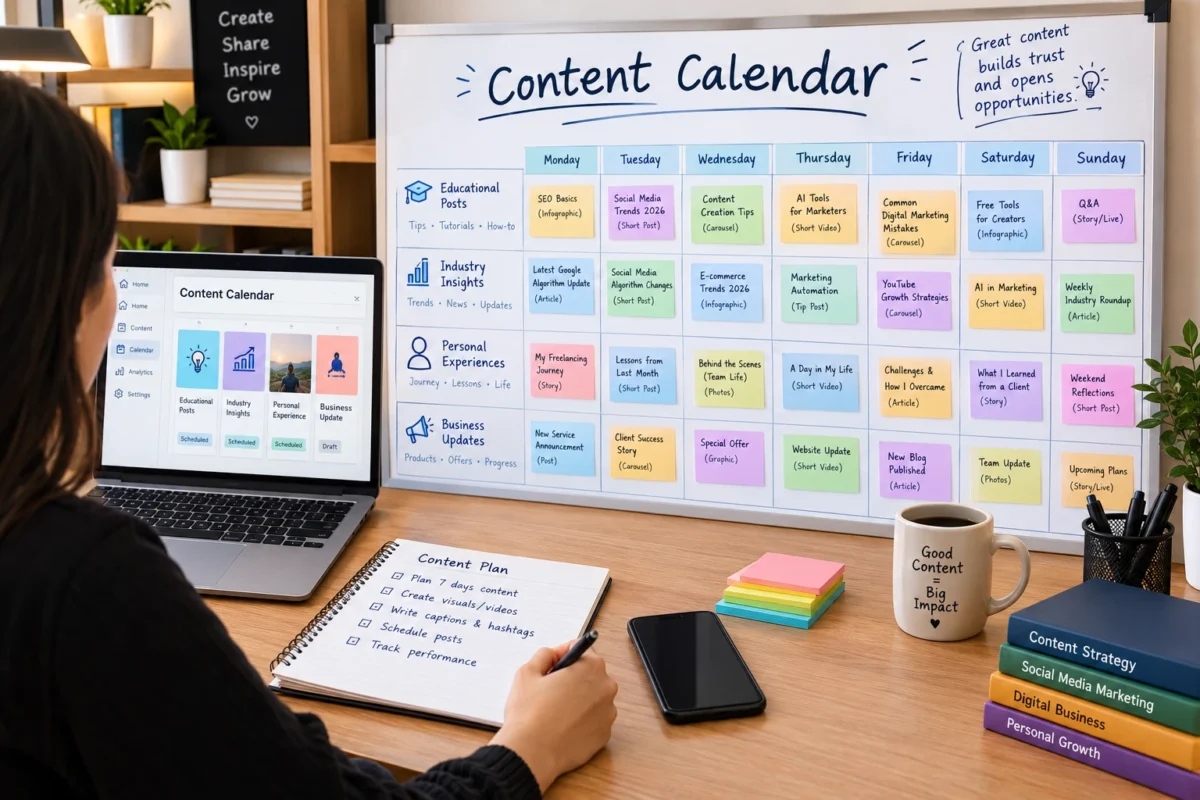
Your profile explains who you are. Your content demonstrates how you think and what you know.
You do not need to publish every day to develop a professional presence. Choose a realistic schedule that allows you to create thoughtful, useful material without neglecting your business.
Use four practical content pillars
Educational content
Share lessons that help your audience understand a problem or perform a task.
Example: “Three website SEO mistakes that can make important pages harder to discover.”
Personal experience
Explain a lesson you learned while managing a business, working with a team, or solving a professional problem.
Example: “What I learned from changing the way our team communicates with clients.”
Industry insights
Discuss a relevant trend, explain what it means for your audience, and distinguish your interpretation from verified facts.
Example: “What small businesses should consider before investing in AI marketing tools.”
Business and project insights
Show how you approach a challenge, make a decision, or improve a process. Protect client confidentiality and obtain permission before sharing identifiable project details.
Example: “How we approach a brand redesign, from understanding the audience to evaluating the final design.”
These content pillars give you variety while maintaining a recognizable professional identity.
Make each post useful and easy to read
A simple structure works well for many professional posts:
- Start with a specific question, observation, or problem.
- Explain the issue in clear language.
- Provide practical advice or an example.
- End with a relevant question or next step when appropriate.
For example, a business owner could publish a short explanation of why a company’s website traffic is not translating into enquiries, followed by several possible issues to investigate.
Avoid misleading hooks, fabricated stories, and engagement bait. Your goal is to build trust over time, not to attract attention at any cost.
4. Build Relationships Instead of Collecting Connections

A large network is not necessarily a valuable network. Meaningful professional relationships develop when people have relevant conversations, exchange useful information, and follow through on commitments.
Connect with the right people
Prioritize individuals whose work or interests align with your goals, including potential clients, industry peers, complementary service providers, and professional communities.
Before sending a connection request, review the person’s profile and identify a genuine reason to connect.
For example, if someone regularly shares useful insights about small business marketing, you could mention a specific idea from their post and explain why you would like to connect.
Engage thoughtfully with other people’s content
Leave comments that add something to the discussion.
Instead of commenting only “Great post,” explain which point you found useful, offer a relevant example, or ask a thoughtful question.
This approach can help other professionals understand your interests and expertise while creating opportunities for conversation.
Follow up without being pushy
If a connection develops into a relevant conversation, continue it naturally. You might share a resource, answer a question, or suggest a discussion when there is a genuine reason.
Avoid sending aggressive sales pitches immediately after someone accepts your request. Professional relationships should not be treated as automatic permission for repeated promotional messages.
5. Demonstrate Credibility With Evidence and Experience
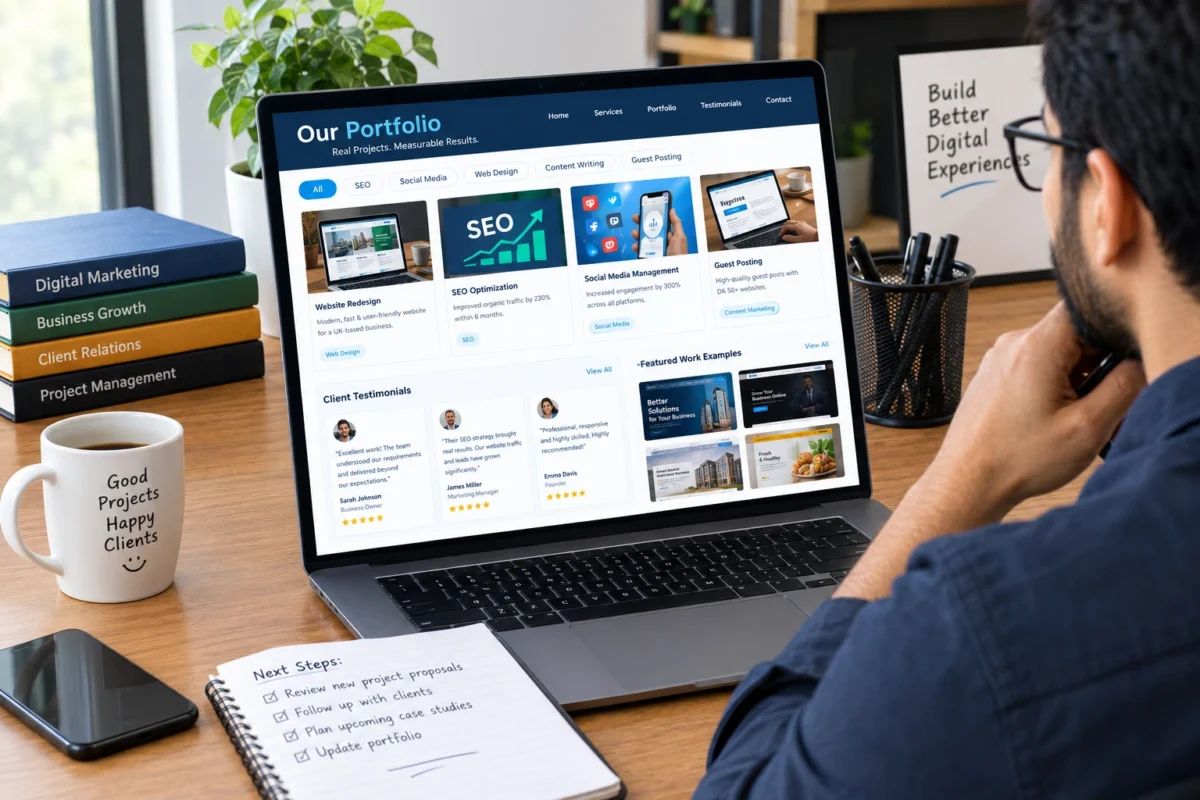
A strong personal brand depends on what you can demonstrate, not just what you claim.
Business owners can build credibility by sharing real professional experiences and explaining how they approach their work.
Useful evidence may include:
- Projects you have completed.
- Relevant qualifications or certifications.
- Verifiable client feedback shared with permission.
- Before-and-after examples where comparisons are fair and accurate.
- Lessons from experiments or professional decisions.
- Articles, presentations, or resources that demonstrate your knowledge.
Turn your work into educational content
Suppose you run a graphic design business. Rather than publishing only promotional images, explain why you chose a particular design direction, how it supports the client’s audience, or what you learned during the project.
This gives readers useful information while showing how you think as a professional.
If you discuss results, explain the context and avoid presenting correlation as proof that your work caused an outcome. Never invent customer success stories or publish confidential information to make your profile look more impressive.
6. Use LinkedIn to Support Business Development

Personal branding can support business growth, but it works best when it connects naturally to your services and customer needs.
Start by making it easy for interested people to understand what your business offers.
Your profile can include an accurate business description, a relevant website link, and clear information about the problems you solve. Where appropriate, direct readers to a portfolio, service page, or educational resource.
Build a simple relationship-to-enquiry process
A practical process might look like this:
- Publish useful content related to your expertise.
- Engage with relevant professionals and potential customers.
- Answer questions and participate in genuine conversations.
- Share relevant examples of your work when they help explain your approach.
- Discuss your services when there is a clear fit and the other person shows interest.
For example, a business owner who publishes helpful content about improving website performance may attract questions from people experiencing similar problems. A useful conversation can then establish whether the business owner’s services are relevant.
This process is more sustainable than treating every LinkedIn connection as an immediate sales opportunity.
Keep your company page and personal profile aligned
Your personal profile and company page should communicate consistent information about your business, services, and values.
You can share company updates from your personal perspective, explain the thinking behind a new project, or discuss a lesson related to your industry.
Avoid copying every company post word for word. Add context or a personal explanation that makes the content useful to your professional audience.
7. Develop a Sustainable LinkedIn Posting Routine
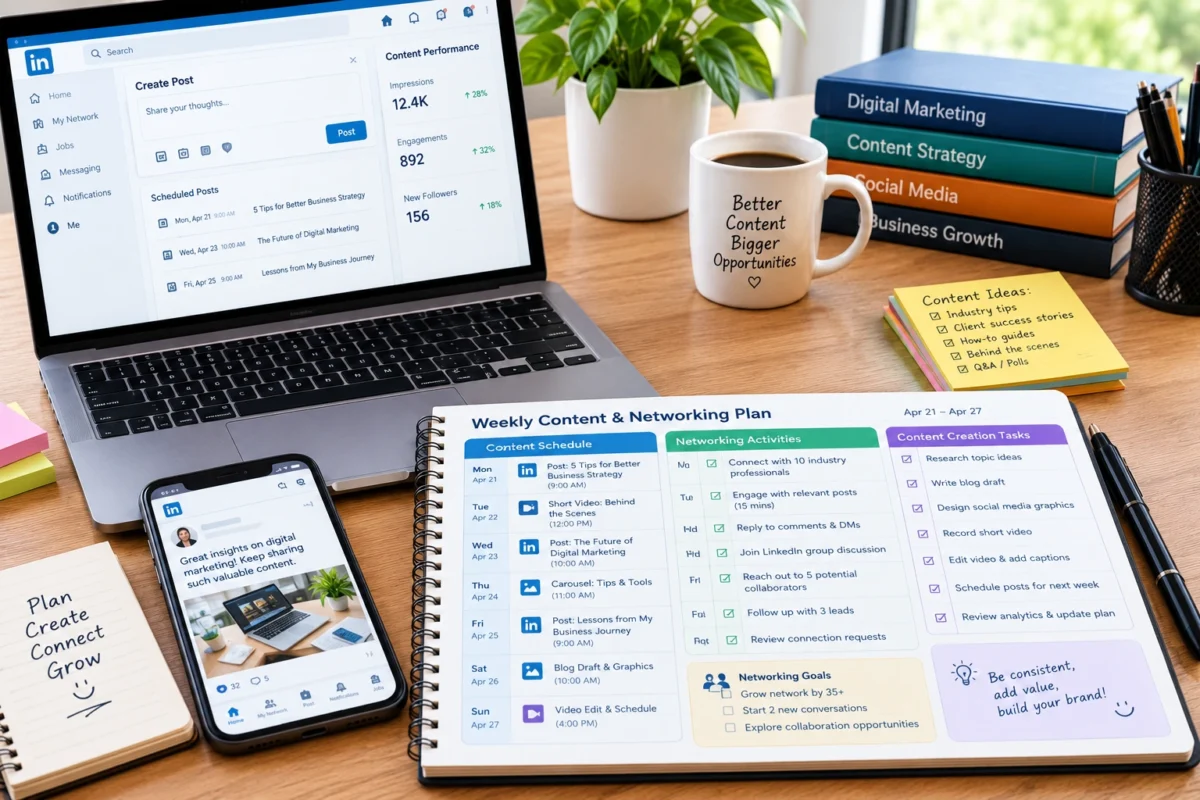
Consistency becomes easier when you plan content in advance.
Create a simple weekly routine that fits your workload. For example:
Day | Content activity |
Monday | Share an educational tip |
Tuesday | Comment on relevant industry discussions |
Wednesday | Publish a personal or professional lesson |
Thursday | Connect with relevant professionals |
Friday | Share a project insight or industry observation |
This is an example schedule, not a formula for guaranteed reach. Adjust it to your audience, available time, and content quality.
Keep a list of questions customers frequently ask. Each question can become a post, article, short checklist, or discussion topic.
Review your posts periodically and identify which subjects generate relevant conversations, profile visits, website enquiries, or other outcomes connected to your goals.
8. Measure the Results of Your Personal Branding Strategy

Personal branding is difficult to improve if you measure only follower counts or likes.
Choose metrics that reflect your business objectives.
Metric | What it helps you understand |
Relevant connection growth | Whether you are reaching appropriate professionals |
Profile views | Whether people are exploring your professional identity |
Post engagement | Whether your content encourages interaction |
Meaningful conversations | Whether your network is developing useful relationships |
Website visits | Whether your LinkedIn activity attracts visitors |
Qualified enquiries | Whether potential customers are expressing genuine interest |
Use the analytics available to your LinkedIn account and website tools. Feature availability and measurement options can vary by account type and change over time.
You can also record where enquiries originate by asking new contacts how they discovered your business.
Review the results regularly, but interpret them carefully. A post with fewer reactions may still generate a valuable conversation, while a widely viewed post may produce little business value.
The right metrics depend on whether your main goal is networking, reputation building, recruitment, partnerships, or client acquisition.
Common LinkedIn Personal Branding Mistakes to Avoid
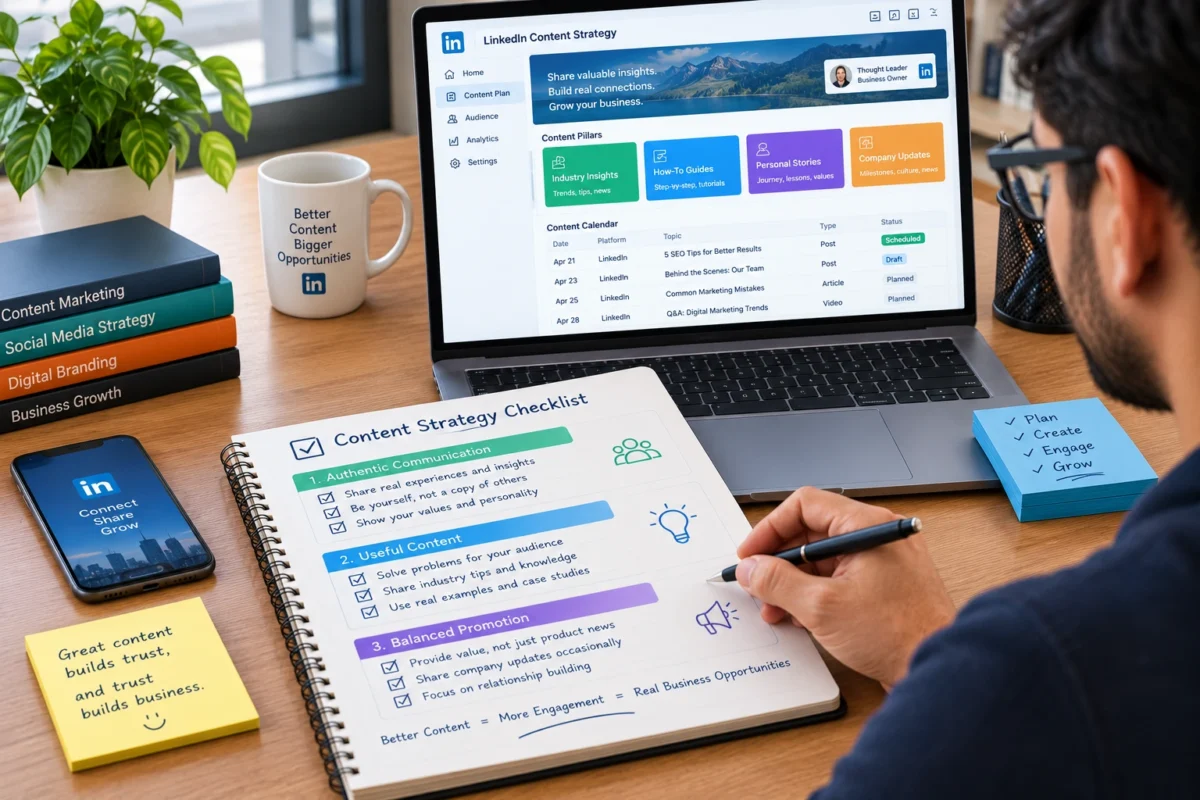
Even a well-designed strategy can become ineffective when the focus shifts from providing value to chasing attention.
1. Making every post a sales pitch: Constant promotion gives readers little reason to follow your content. Balance service-related updates with education, professional insights, and useful experiences.
2. Copying other creators: Study successful professionals to understand their approaches, but develop your own examples, opinions, and writing style. Your experience is what makes your perspective distinctive.
3. Using a vague profile headline: A headline that says only “Entrepreneur” or “Business Owner” provides little context. Explain your area of work and whom you help.
4. Automating every interaction: Automated messages and generic comments can feel impersonal. Use tools carefully, respect platform rules, and prioritize genuine communication.
5. Giving up too early: A personal brand develops through repeated, credible interactions. Avoid judging the entire strategy by a few posts or a short period of activity.
Key Takeaways
- Define the audience and expertise you want to be known for.
- Optimize your LinkedIn headline, About section, profile photo, and Featured section.
- Publish useful educational content, professional lessons, and relevant industry insights.
- Build relationships through thoughtful comments and personalized connections.
- Demonstrate credibility with genuine examples and verifiable experience.
- Connect your personal profile to your business without making every interaction promotional.
- Track meaningful conversations, qualified enquiries, and other relevant outcomes.
- Maintain a realistic routine that you can sustain over time.
Frequently Asked Questions
Personal branding helps business owners communicate their expertise, professional values, and business focus. It gives potential clients, partners, and colleagues a clearer understanding of the person behind the company. A consistent and credible presence can support professional relationships and business development, although it does not guarantee leads or sales.
Choose a publishing schedule that you can maintain without compromising content quality. Start with two or three useful posts per week if that fits your workload, and supplement them with thoughtful comments and conversations. Review your audience’s responses and adjust your routine according to your goals rather than following a rigid posting formula.
Business owners can share practical industry advice, lessons from professional experience, project insights, answers to common customer questions, and informed commentary on relevant developments. The strongest topics connect the owner’s genuine expertise with the audience’s needs. Avoid sharing confidential client information or making unsupported claims about business results.
A clear profile and useful content can help relevant professionals discover your expertise. Thoughtful networking may lead to conversations with potential customers, referral partners, or collaborators. To support lead generation, explain your services clearly, share relevant work samples, respond professionally to enquiries, and measure qualified opportunities rather than relying solely on likes and followers.
Both can serve different purposes. A personal profile communicates an owner’s experience, perspective, and professional relationships, while a company page represents the organization and its updates. Using both consistently can provide a more complete picture of the business. Keep information accurate and tailor content to the purpose of each presence.
Conclusion
Effective LinkedIn personal branding strategies for business owners are built on clarity, credibility, and consistency. Your profile should explain what you do, your content should demonstrate what you know, and your interactions should show how you build professional relationships.
You do not need to become an influencer or publish every day. Start by improving your profile, identifying three or four content themes, and sharing useful insights from your real experience.
Over time, these habits can help the right people understand your expertise and recognize when your business may be relevant to their needs. Results will vary, so keep evaluating what works for your audience and refining your approach.
If you want to strengthen your digital marketing knowledge, explore the learning resources at uskills.pk. Take the first step today: review your LinkedIn headline and make sure it clearly communicates who you help and what value you provide.